
There's a photograph that captures it perfectly. A group of kids in the early 1960s, maybe eight or ten years old, perched at the top of a metal slide that rises roughly twelve feet into the air. No shade canopy. No rubberized landing zone. Just scorched steel in the July sun and a concrete pad at the bottom waiting to greet whoever came down too fast or at the wrong angle. The kids in the photo are grinning.
That slide — and the culture that built it — is almost entirely gone now. And the story of how it disappeared says more about modern America than most people realize.
What the Old Playground Actually Looked Like
If you grew up before roughly 1990, you probably remember the hardware. There were the towering metal slides, often painted red or yellow, that got hot enough by noon to leave a welt on the back of your thighs. There were wooden jungle gyms with splinters built in — not as a defect, but as a fact of life. Monkey bars hung over asphalt or packed dirt, and nobody put anything soft underneath because nobody thought to.
Merry-go-rounds spun fast enough to throw a kid off if they weren't paying attention. Seesaws could — and did — slam down hard if your partner jumped off without warning. Some parks had what were essentially metal cage structures that kids could climb to terrifying heights on, with no obvious purpose beyond the climb itself.
The equipment wasn't designed to be forgiving. It was designed to be fun. Those were considered the same thing.
The Scrape Was Part of the Education
Here's what most adults from that era will tell you, if you ask: they fell. A lot. They got cuts, bruises, the occasional broken arm. They went home dirty and sometimes bleeding, and their parents cleaned them up and sent them back outside the next day.
That sounds almost radical now. But there was a logic to it that child development researchers have spent decades trying to articulate after the fact.
Risk, it turns out, teaches things. A kid who climbs too high and gets scared learns to judge their own limits. A kid who falls learns that falling isn't fatal — and that getting back up is possible. A kid who scrapes their knee on the way down a slide learns, in the most immediate way imaginable, that the world has edges and you have to navigate them.
Developmental psychologists have a term for it: risk calibration. Children who are allowed to encounter manageable danger develop better judgment about unmanageable danger. They learn to assess a situation before they act. They build what researchers sometimes call a "fear thermostat" — an internal sense of when something is actually threatening versus just unfamiliar.
The old playground was, in its rough and unintentional way, a laboratory for exactly that.
When the Lawyers Arrived
The shift didn't happen overnight, but it accelerated sharply through the 1980s and 1990s. A series of high-profile lawsuits against municipalities and school districts put playground equipment under legal scrutiny. Insurance premiums climbed. Local governments started removing equipment that posed any conceivable liability.
The Consumer Product Safety Commission issued guidelines. Safety advocates pushed for softer surfaces, lower heights, rounded edges. The old metal slides came down. The wooden structures were replaced with plastic. Concrete gave way to rubber mulch and foam padding.
 Photo: Consumer Product Safety Commission, via cdn.forumcomm.com
By the early 2000s, the American playground had been almost entirely redesigned around one central principle: nothing should be able to seriously hurt a child. The equipment got shorter, smoother, and slower. The surfaces got softer. The whole experience got quieter.
Parents, understandably, felt relieved. Nobody wants their child badly hurt. But something else happened at the same time, something harder to quantify.
What Got Engineered Away
Studies in the years since have found some uncomfortable patterns. Rates of childhood anxiety in the United States have climbed steadily since the late 1990s. Children today report higher levels of fear around new situations and unfamiliar challenges. Some researchers — including psychologist Peter Gray at Boston College — have drawn a direct line between the elimination of unsupervised, risky play and the rise of what he calls "fragility" in young people.
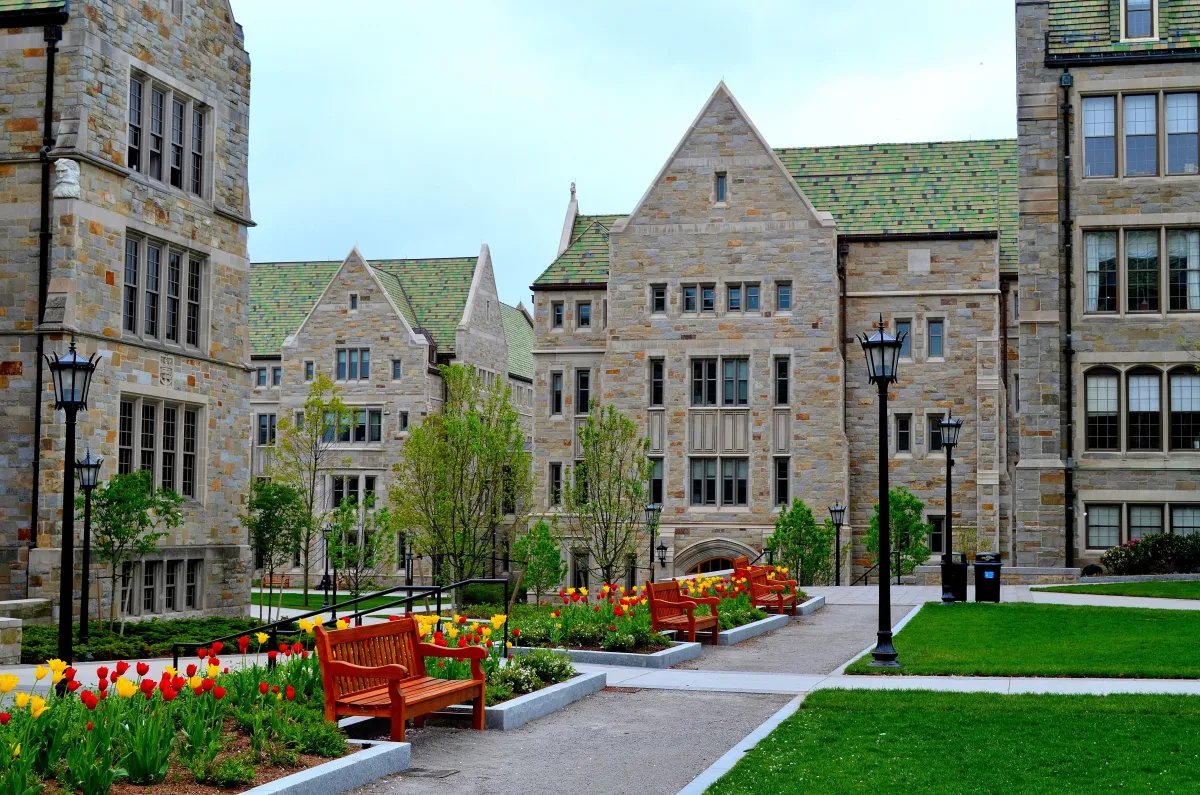 Photo: Boston College, via i.pinimg.com
The argument isn't that broken arms are good. It's that the process of navigating a world that doesn't always protect you is itself valuable — and that when you remove all the friction, you also remove the lesson.
There's also a subtler loss. The old playground was genuinely exciting. Kids wanted to be there. The challenge was the point. Today's equipment, designed to eliminate all meaningful risk, often eliminates meaningful engagement along with it. Walk past a modern playground on a summer afternoon and count how many kids are actually playing on the equipment versus staring at a phone. The data isn't encouraging.
A Few Places Are Pushing Back
Interestingly, some communities have started to reconsider. A movement toward what advocates call "adventure playgrounds" has gained quiet traction in parts of the country — spaces where kids can build things, use real tools, encounter genuine uncertainty. Some are essentially organized junk piles, and they're wildly popular with children.
A handful of cities have reinstated taller climbing structures and reduced the padding underneath them, citing research on the developmental value of risk. It's a small trend, and it runs directly against decades of regulatory momentum. But it exists.
The Bigger Picture
The story of the American playground is really a story about how a society decides what it owes its children. The mid-century answer was: freedom, challenge, and the dignity of figuring things out yourself. The modern answer has been: protection, supervision, and the elimination of anything that could go wrong.
Both impulses come from a place of love. But only one of them produces adults who know how to handle a world that doesn't have rubberized floors.
Somewhere between the twelve-foot metal slide and the four-foot plastic one, something got lost. It might be worth figuring out what.