Newspaper Clippings, Church Pews, and Dance Cards: The Surprisingly Rich World of Finding Love Before Dating Apps
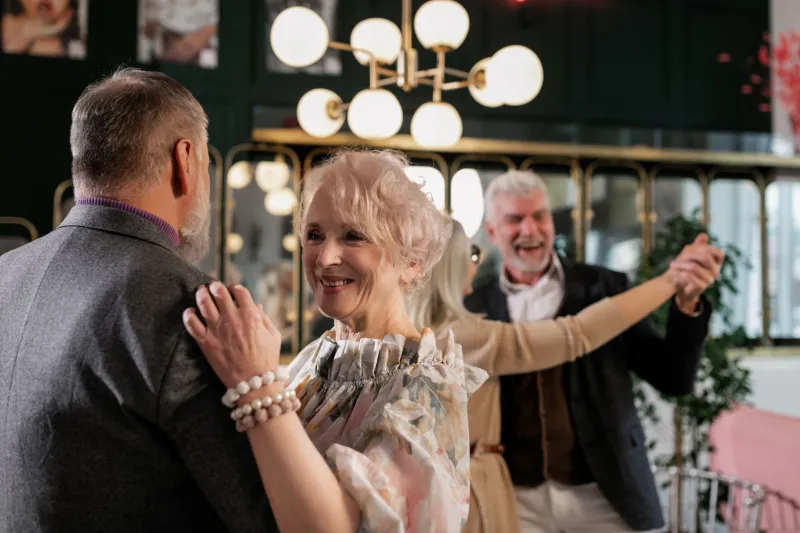
Somewhere in a shoebox in an attic in Ohio, there's probably a folded newspaper clipping from 1954. A few lines of careful, slightly nervous prose. Single gentleman, 32, steady employment, enjoys fishing and Sunday dinners, seeks kind-hearted woman for correspondence and possible courtship. A stamp. A dream. Maybe a wife.
It sounds almost quaint from where we're standing now — an era of infinite profiles, AI-matched compatibility scores, and the ability to swipe through two hundred potential partners before your morning coffee gets cold. But before any of that existed, Americans were doing something genuinely remarkable: finding love through creativity, community, and a whole lot of patience.
The Personal Ad Was Serious Business
Personal advertisements in American newspapers date back to the 1700s, but they hit their stride in the mid-20th century, particularly in smaller cities and rural areas where your social circle had natural limits. Running a personal ad wasn't considered desperate — it was considered resourceful. You were working with what you had.
Writing one required real thought. You had maybe forty words, you were paying by the line, and you had exactly one shot to sound like someone worth writing back to. People agonized over those lines. They asked friends to read drafts. They rewrote them at kitchen tables under lamplight. The investment of effort before you'd even made contact with a single potential match was enormous compared to the thirty seconds it takes to set up a profile today.
And the responses came by mail — actual handwritten letters, sometimes with a photograph tucked inside. You might wait two weeks to hear back from someone. Then another week after you replied. A single exchange of letters could stretch across a month. By the time you actually met for coffee, you'd already built something: a sense of who this person was through their words, their handwriting, the things they chose to share and the things they held back.
Your Community Was Your Matchmaker
Personal ads were really just one piece of a much larger social infrastructure built around connecting people. The church social was perhaps the most powerful matchmaking institution in mid-century America and it didn't advertise itself as one. It was just Sunday fellowship, a potluck, maybe some square dancing in the church hall. But everyone knew what it also was.
Parents brought their unmarried children. Neighbors made quiet introductions. The pastor's wife had a remarkable memory for who was available and who might complement whom. It was matchmaking disguised as community, and it worked precisely because it wasn't transactional. You weren't there to find a date — you were there to be part of something. The romantic possibility was almost a side effect of genuine human gathering.
The same was true of community dances, grange halls, summer socials, and neighborhood block parties. These weren't manufactured networking events. They were just life — and life, organized around physical community, naturally created the conditions for people to meet.
The Dance Card Wasn't Just Ceremonial
In earlier decades, the dance card was a literal object: a small booklet a woman carried to a formal dance, where men would sign up in advance to partner with her for specific songs. It sounds almost formal to the point of absurdity now, but consider what it actually accomplished. It forced intention. A man who wanted to dance with you had to approach you, introduce himself, and make a small commitment — all before the music started. There was no ghosting a dance card.
By the postwar era, the formal card had largely disappeared, but the underlying principle hadn't. Asking someone to dance still required you to walk across a room, make eye contact, and accept the possibility of rejection in front of other people. That vulnerability was built into the process. It wasn't a bug — it was the whole point.
What the Slowness Actually Did
Here's the thing that gets lost in the nostalgia: the friction wasn't just an inconvenience people tolerated. It was doing something. The weeks between letters gave people time to reflect on whether they were genuinely interested or just lonely. The community setting meant that the person you were pursuing was someone others could vouch for — your neighbor knew his family, your cousin had gone to school with her sister. Context existed in a way it simply doesn't when you match with a stranger whose only verified fact is that they're within fifteen miles of you.
The investment of time and effort also created a kind of natural filter. If you weren't serious, you probably weren't going to write three careful letters and wait a month for replies. The process asked something of you, and that asking tended to attract people who were ready to give something back.
What We Swapped It For
None of this is to say the old system was perfect. It was deeply limited by geography, shaped by rigid social expectations, and often entirely inaccessible if you fell outside the mainstream of your community. For LGBTQ+ Americans in particular, the community-based model was frequently hostile rather than helpful. The expansion of possibility that dating apps represent is genuinely significant.
But we did make a trade. We traded patience for volume, community context for algorithmic suggestion, and the slow build of epistolary connection for the instant gratification of a match notification. The average American now spends over five hours a week on dating apps — and yet studies consistently show that people report feeling lonelier and more frustrated with the process than ever.
Maybe the stamp and the dream were onto something. Not the waiting itself — but what the waiting made you do. It made you think carefully about what you wanted, work hard to express it, and trust that the right person was worth the time it took to find them.
In a world where you can access thousands of potential partners from your couch, that kind of deliberate hope feels almost radical.