When Your Landlord Actually Lived Next Door: How American Housing Went From Personal to Predatory
Walk through any American neighborhood today and try to figure out who actually owns the houses. Chances are, you'll find yourself staring at a web of LLCs, investment firms, and property management companies with names like "Sunrise Capital Holdings" or "Premier Asset Group." The person collecting rent on the blue house with the broken fence might live in another state entirely—or might not even be a person at all.
It wasn't always this way. Not even close.
When Housing Was a Handshake Business
In 1955, if you wanted to rent an apartment in Cleveland or buy a house in Phoenix, you dealt with actual human beings who lived in your community. Your landlord was probably Mrs. Henderson, who owned the duplex two blocks over and collected rent every first Tuesday while asking about your mother's arthritis. Your realtor was Bob from the Methodist church, who'd been selling homes in the same neighborhood for twenty years and knew which houses had good plumbing and which ones flooded every spring.
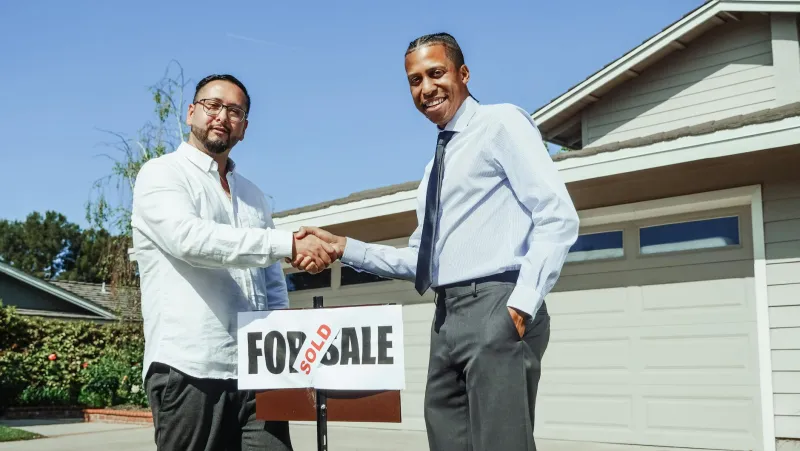
The entire transaction was refreshingly simple. Want to rent that two-bedroom on Maple Street? You'd knock on the door, have a conversation with the owner, maybe provide a reference from your boss or pastor, and shake hands. Done. The "application process" was a chat over coffee. Credit checks were unheard of because credit scores didn't exist yet. Background checks meant asking around the neighborhood.
Buying was equally straightforward. You'd find a house you liked, negotiate a price face-to-face with the owner, put down what you could afford—often just a few hundred dollars—and work out payment terms that made sense for both parties. The paperwork could fit in a manila envelope, and closing took place at the kitchen table more often than a lawyer's office.
The Numbers That Made It All Possible
Here's what made this personal approach work: the economics actually favored regular people. In 1950, the median home price in America was $7,400—about twice the median annual income of $3,300. A factory worker earning $65 a week could realistically save for a down payment in a year or two. Monthly payments on a typical mortgage ran around $50—manageable on most working-class salaries.
Rent was even more reasonable. A decent two-bedroom apartment in most cities cost between $40 and $60 per month. That meant housing typically consumed 15-20% of a family's income, leaving plenty of room for everything else. Landlords weren't trying to maximize every dollar because they didn't need to—they were making steady, reasonable returns while serving their communities.
When Algorithms Replaced Handshakes
Fast-forward to today, and the entire landscape has been flipped upside down. That same median home now costs $400,000—roughly eight times the median income of $50,000. But the price explosion is only part of the story. The real revolution happened in who's doing the buying and selling.
Institutional investors now own millions of single-family homes across America. Companies like Invitation Homes and American Homes 4 Rent have purchased entire subdivisions, turning homeownership dreams into rental revenue streams. In some hot markets, these firms account for 20-25% of all home purchases, pricing out families who just want a place to call their own.
The rental market has been equally transformed. Your landlord today is more likely to be a property management company that oversees thousands of units across multiple states. They use algorithmic pricing models that adjust rent based on market conditions, competitor analysis, and demand forecasting. The human element—knowing that your tenant just lost their job or is going through a divorce—has been completely removed from the equation.
The Application Industrial Complex
Trying to rent an apartment now requires navigating what feels like applying for a security clearance. Credit checks, background checks, employment verification, bank statements, references from previous landlords, application fees ranging from $50 to $200 per property, and income requirements that often demand you earn three times the monthly rent.
Many renters find themselves competing against dozens of other applicants for the same unit, submitting sealed bids above asking price just like home buyers. Some property companies even require you to apply through apps that use artificial intelligence to screen tenants, reducing human decision-making to data points and algorithms.
The Human Cost of Efficiency
The old system wasn't perfect—it could be discriminatory and often relied on informal networks that excluded minorities and newcomers. But it did something that our current system has completely abandoned: it treated housing as a basic human need rather than a financial instrument.
When Mrs. Henderson was your landlord, she might let you pay rent a few days late if you explained you were between paychecks. When Bob the realtor was helping you find a house, he cared about whether you'd be happy there, not just whether the transaction would close. The community aspect of housing created relationships and accountability on both sides.
Today's institutional approach prioritizes efficiency and profit maximization over everything else. Tenants become account numbers. Rent increases happen automatically based on market algorithms, not individual circumstances. Evictions are processed through legal departments, not resolved through conversations.
What We Lost When Wall Street Moved In
The transformation of American housing from a community-based system to a corporate-dominated industry represents more than just changing business models—it's a fundamental shift in how we think about one of life's most basic needs.
We've gained efficiency, standardization, and access to capital that can build housing faster than ever before. But we've lost the human relationships that made housing about more than just monthly payments. We've traded neighborly landlords for corporate profit centers, personal negotiations for algorithmic pricing, and community accountability for shareholder returns.
The next time you drive through an American neighborhood, remember that those houses were once bought and sold by people who knew each other's names. The vault of change has locked away a time when housing was still about homes, not investment portfolios.