When College Was Something You Could Actually Afford: The Decade America's Students Stopped Working Their Way Through School

When College Was Something You Could Actually Afford: The Decade America's Students Stopped Working Their Way Through School
In 1975, Mike Thompson worked 20 hours a week at a campus bookstore while studying engineering at the University of Michigan. His paycheck of $85 every two weeks covered his tuition, room and board, textbooks, and still left enough for pizza money and the occasional movie. He graduated in 1979 with a bachelor's degree and exactly zero dollars in student debt.
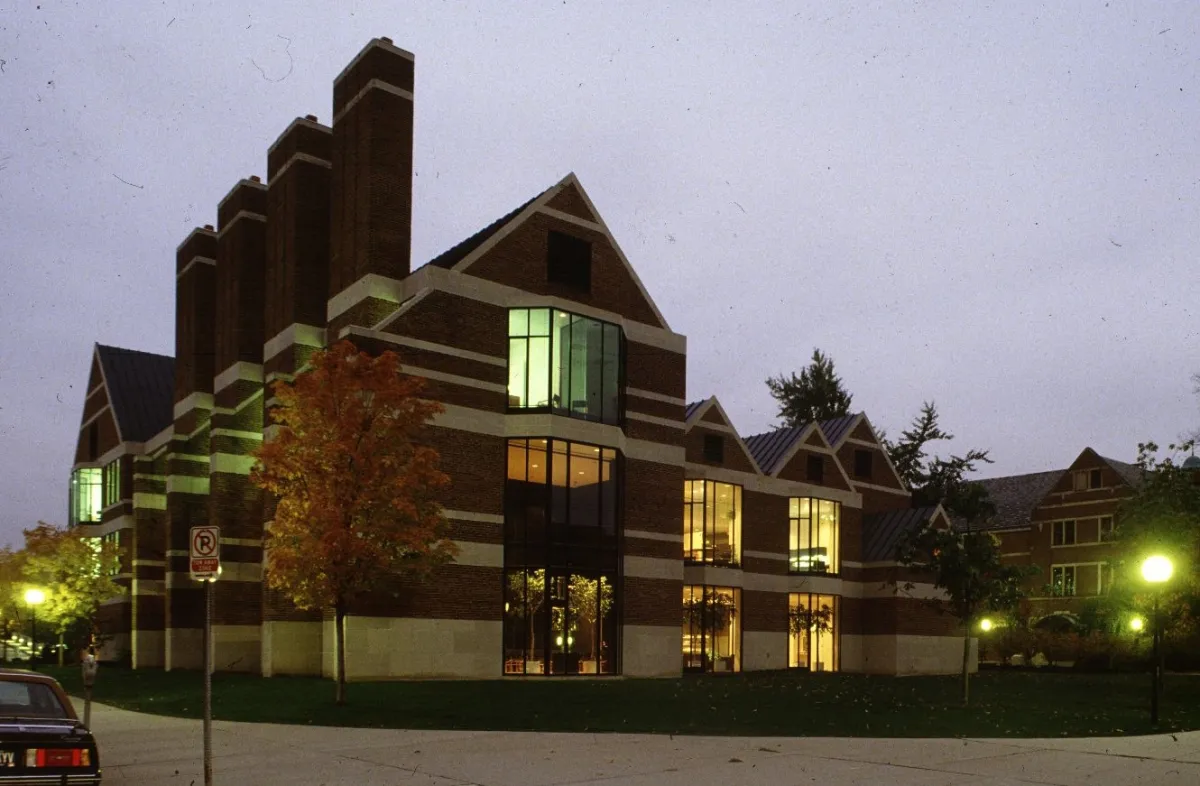 Photo: University of Michigan, via images.squarespace-cdn.com
Today, Mike's grandson works 25 hours a week at the same campus bookstore for $12 an hour. His monthly earnings of roughly $1,200 don't even cover his monthly student loan payment, much less tuition, housing, or food. He'll graduate with over $40,000 in debt for the same degree his grandfather earned while actually making money.
Somewhere between 1975 and today, the fundamental economics of American higher education broke. But the break didn't happen gradually—it happened in one specific decade that changed everything.
When the Math Actually Worked
Let's start with the numbers that made Mike's debt-free graduation possible. In 1975, annual tuition at the University of Michigan was $1,200 for in-state students. Room and board added another $1,800, bringing the total cost to about $3,000 per year. Books and supplies might add another $200, so let's call it $3,200 for the full college experience.
Now here's the crucial part: minimum wage in 1975 was $2.10 per hour. A student working 20 hours per week for 30 weeks during the school year would earn $1,260. Add a full-time summer job at 40 hours per week for 12 weeks, and you'd earn another $1,008. Total annual earnings from part-time work: $2,268.
That wasn't quite enough to cover the full $3,200, but it got you about 70% of the way there. Many students could bridge the gap with small scholarships, family help, or by working a few extra hours. The point is, the math was close enough that a motivated student could realistically work their way through college without taking on crushing debt.
This wasn't just possible at state schools. Even private colleges were within reach for working students. Harvard's tuition in 1975 was $3,740—expensive, but not impossibly so for a student willing to work summers and weekends.
The Golden Decade of Accessible Education
The period from 1965 to 1975 represented the high-water mark of college affordability in American history. State governments were heavily investing in public higher education, viewing it as essential infrastructure for economic growth. Federal Pell Grants, introduced in 1972, provided additional support for low-income students. And importantly, colleges themselves were operating with relatively modest budgets and administrative structures.
The typical state university in 1970 had a president, a few vice presidents, some deans, and a small administrative staff. There were no armies of student life coordinators, marketing specialists, or enrollment management professionals. Campuses were functional rather than luxurious—dorms were basic, dining halls served simple food, and recreational facilities consisted of a gym and maybe a pool.
This lean approach kept costs low while still delivering excellent education. Professors taught heavier course loads, class sizes were larger, and students were expected to be more independent in their learning. It wasn't necessarily a better educational experience, but it was one that middle-class families could afford without financial strain.
The Turning Point: 1978-1985
The transformation of college affordability didn't happen overnight, but it accelerated dramatically between 1978 and 1985. Several factors converged during this period to fundamentally alter the economics of higher education.
First, federal policy changed in ways that seemed helpful but ultimately drove up costs. The Middle Income Student Assistance Act of 1978 expanded eligibility for federal loans, making it easier for students to borrow money for college. The introduction of PLUS loans in 1980 allowed parents to borrow even more. These programs were designed to increase access to higher education, but they had an unintended consequence: they gave colleges permission to raise prices.
Why charge $3,000 per year when students could now borrow $5,000? Why keep costs low when federal loans made higher prices affordable? The availability of easy credit removed the natural constraint that had kept college costs in check.
Second, state funding for public universities began to decline as a percentage of total budgets. The fiscal crises of the late 1970s and early 1980s forced state governments to cut spending, and higher education was an easy target. Universities responded by shifting costs to students through higher tuition and fees.
Third, colleges began competing on amenities rather than just academic quality. The rise of college rankings in the 1980s created pressure for universities to invest in impressive facilities, extensive student services, and large administrative staffs. These improvements made campus life more comfortable, but they also drove up costs significantly.
The New Math of Impossibility
By 1985, the math that had made debt-free graduation possible just ten years earlier had completely broken down. Tuition at the University of Michigan had risen to $2,500 for in-state students—more than double the 1975 rate, while minimum wage had only increased to $3.35 per hour.
A student working the same 20 hours per week during the school year and full-time during summer would now earn about $3,700 annually. That sounds like more money, but tuition, room, and board had increased to about $6,000 per year. The gap between what students could earn and what college cost had grown from manageable to insurmountable.
This was the moment when student debt became inevitable rather than optional. Students who might have worked their way through college in 1975 now had no choice but to borrow money to make up the difference.
The Debt Spiral Accelerates
Once student borrowing became normal, the constraint on college cost increases disappeared entirely. Universities could raise prices confident that students would simply borrow more money to cover the difference. This created a vicious cycle: higher prices led to more borrowing, which enabled even higher prices.
The introduction of private student loans in the 1990s and early 2000s accelerated this trend. Students could now borrow virtually unlimited amounts to cover not just tuition, but also housing, food, travel, and lifestyle expenses. Colleges responded by building luxury dorms, gourmet dining facilities, and resort-style recreational centers.
The human cost of this transformation is staggering. Today's college graduates enter the workforce with an average of $30,000 in student debt, compared to virtually zero for graduates in the 1970s. Many carry much higher balances—$50,000, $75,000, or even six-figure debt loads that will take decades to repay.
What We Lost When College Became a Luxury
The shift from affordable to expensive higher education represents more than just a financial change—it's fundamentally altered who can access college and how students experience their education.
In the 1970s, college was something that motivated students from working-class families could realistically pursue. Today, it often requires either family wealth or a willingness to take on enormous debt. This has created a new form of class stratification, where educational opportunity is increasingly determined by family financial resources rather than student ability or effort.
The debt burden also changes how students approach their education. Instead of exploring different fields or taking intellectual risks, many students feel pressure to choose majors based purely on earning potential. The joy of learning gets replaced by the anxiety of debt repayment.
Perhaps most importantly, we've lost the idea that higher education should be accessible to anyone willing to work for it. The part-time job that once covered tuition has become a quaint relic of a more affordable era—a reminder of when college was an opportunity rather than a luxury, and when American students could actually work their way toward a degree instead of borrowing their way into decades of debt.
The vault of change has locked away not just affordable college, but the very possibility that education could be earned through effort rather than financed through debt.