Your Neighborhood Had Its Own Dairy Route: When Food Delivery Meant Knowing Your Customer's Kids by Name
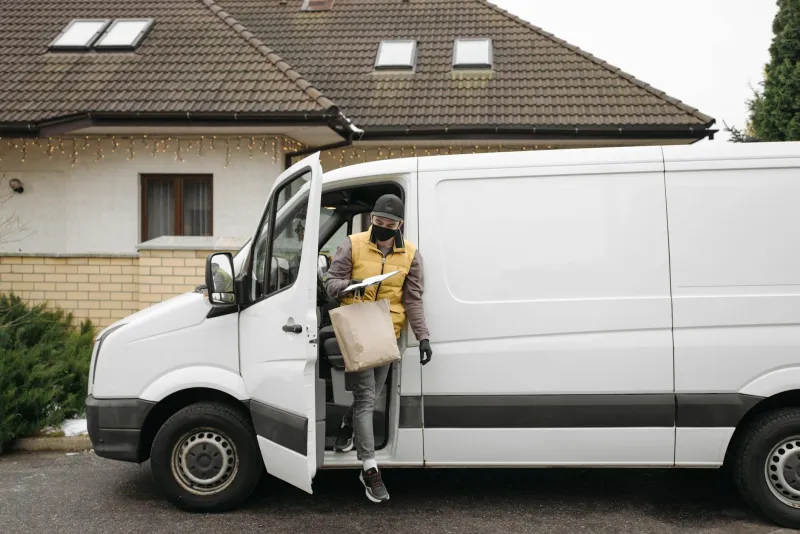
The 5 AM Neighborhood Guardian
Long before Americans heard the hum of delivery trucks or checked tracking apps, there was the gentle clink of glass bottles on front porches across the country. The milkman arrived before dawn, moving silently through neighborhoods with the precision of someone who knew every family's routine, every dog's temperament, and every porch step that creaked.
This wasn't just food delivery—it was a community institution. The milkman knew that the Johnsons' baby was teething and they'd need extra milk, that Mrs. Peterson was hosting her bridge club on Thursdays and would want cream for coffee, and that the teenage Thompson boy was going through a growth spurt and could single-handedly empty two quarts overnight.
When Your Food Supplier Was Your Financial Safety Net
The relationship between families and their milkman operated on trust that seems almost quaint today. Payment happened weekly, sometimes monthly, often with a simple note left in the empty bottles: "Put it on my tab, Charlie." During the Depression and wartime rationing, milkmen extended credit to struggling families, understanding that steady customers were worth more than immediate payment.
 Photo: Charlie, via esle.io
This credit system worked because milkmen lived in the communities they served. Charlie wasn't a corporate entity—he was the guy you saw at church, whose kids went to the same school as yours, whose route was his livelihood and reputation. Default meant facing your neighbor, not an algorithm.
The Milk Note Economy
Communication happened through a simple but effective system: handwritten notes tucked into empty bottles or clipped to the milk box. "Two quarts today, Charlie—having company." "Skip Thursday, we're visiting my mother." "Could you bring eggs this week? Jenny's making a cake." These notes created a daily dialogue between families and their food supplier that was both practical and personal.
The milk box itself became a neighborhood communication hub. Milkmen left notes about new products, holiday schedules, or changes to their route. During emergencies—when someone was sick or needed help—the milk box served as a message center for the community's informal support network.
Beyond Milk: The Rolling Grocery Store
By the 1950s, many dairy routes had expanded into mobile grocery services. The milk truck carried fresh eggs from local farms, butter, cheese, bread, and seasonal produce. Some routes included basic household supplies—dish soap, paper products, even flowers for special occasions. The milkman became a one-stop solution for busy families, especially mothers managing households without second cars.
This expansion meant the milkman knew his customers' complete consumption patterns. He'd notice when the elderly widow stopped ordering her usual amount, signaling potential health problems. He'd stock extra ice cream during school vacations and adjust orders during family vacations without being asked.
The Local Food Web
Milk routes represented a radically different food distribution system than today's global supply chains. Most dairy companies were regional, sourcing from farms within a day's drive of the processing plant. Customers knew where their milk came from—often the specific dairy farm—and seasonal variations in taste and richness were expected and appreciated.
This local system created economic resilience. When one farm had problems, others in the network could compensate. The milkman served as the connection point between urban families and rural producers, carrying information both ways: farmers learned what products were in demand, while customers heard stories about the farms that fed them.
The Decline of the Daily Delivery
The death of the milk route wasn't sudden—it was a gradual strangulation by changing American lifestyles. Suburban growth spread customers across wider areas, making routes less efficient. The rise of two-car families meant mothers could drive to supermarkets that offered lower prices through volume purchasing. Refrigerators grew larger, reducing the need for daily delivery.
Supermarket chains used their buying power to undercut local dairies on price, while offering the convenience of one-stop shopping. The personal service that had been the milkman's greatest strength became a luxury that busy families felt they couldn't afford.
What Disappeared With the Route Truck
The end of milk delivery represented more than the loss of a service—it marked the beginning of our disconnection from food sources. Today's food system is more efficient, cheaper, and offers incredible variety, but it's also anonymous. Your grocery delivery driver doesn't know your family's habits, extend credit during tough times, or serve as an informal neighborhood watch.
The milkman's route created what economists now call "social capital"—the network of relationships that make communities function. He was often the first to notice when elderly customers needed help, when families were struggling, or when children were home sick from school. This informal monitoring system provided a safety net that modern food delivery, for all its technological sophistication, cannot replicate.
The Return of Personal Delivery
Today's food delivery apps promise convenience that rivals the old milk routes, but they operate on a fundamentally different model. Drivers are independent contractors who rarely serve the same customers twice. The relationship is transactional rather than relational, efficient rather than personal.
Some modern companies have tried to recreate the milkman model—subscription services that deliver organic produce, artisanal dairy products, or locally sourced goods. But they struggle to recreate the community integration that made the original system work. The milkman wasn't just delivering food; he was maintaining relationships that took years to build and represented mutual investment in neighborhood stability.
The milk route belonged to an era when Americans lived more rooted lives, when moving was less common and community ties were stronger. Its disappearance reflects broader changes in how we relate to our neighbors, our food, and the rhythm of daily life. We gained efficiency and choice, but lost the comfort of knowing that someone was looking out for us, one delivery at a time.