When Your Blue Passport Was a Golden Ticket: How American Travel Freedom Disappeared Behind Red Tape
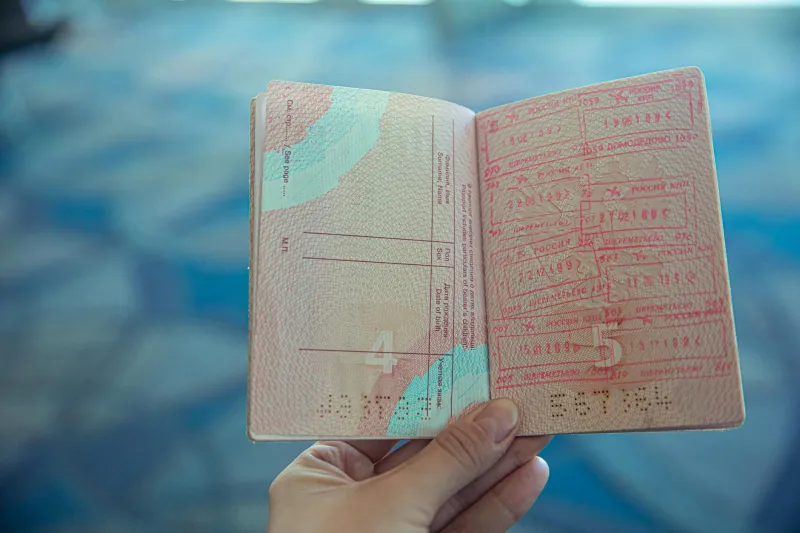
The World Was Your Oyster
In 1970, an American college graduate could buy a plane ticket to London, pack a backpack, and show up at Heathrow with nothing more than their blue passport and a sense of adventure. No visa applications, no embassy interviews, no months of advance planning. The immigration officer would stamp their passport, maybe ask how long they planned to stay, and wave them through to explore Europe for as long as their money lasted.
That same spontaneous trip today would require navigating a maze of visa requirements, application fees, and bureaucratic processes that can take months to complete. What changed? How did the American passport transform from a near-universal key to the world into a document that often feels more like a starting point for paperwork than a ticket to freedom?
When Borders Were Suggestions, Not Fortresses
The golden age of American passport power peaked in the decades following World War II. Americans could travel visa-free to virtually every Western European country, most of Latin America, and significant portions of Asia. The Cold War had divided the world into clear spheres, but within the Western sphere, movement was remarkably fluid.
Consider this: in 1975, Americans could visit 65 countries without obtaining a visa in advance. They could decide on a Tuesday to visit France and be sipping wine in Paris by Thursday evening. The only real barriers were the cost of airfare and the limits of their vacation time.
European backpacking wasn't just a rite of passage—it was a logistical possibility that didn't require a law degree to navigate. Students would buy Eurail passes and hopscotch across borders with the casual ease of crossing state lines. Border guards were more concerned with smuggling than with the intricacies of immigration law.
The Security Revolution Changed Everything
The turning point came gradually, then suddenly. The rise of international terrorism in the 1970s and 80s began shifting the conversation around border security. But it was September 11, 2001, that fundamentally altered how the world thought about the movement of people across borders.
Suddenly, every traveler became a potential security risk. Countries that had welcomed Americans with minimal scrutiny began implementing visa requirements, advance screening processes, and biometric data collection. The European Union, ironically, became more restrictive toward American tourists even as it eliminated borders between member states.
 Photo: European Union, via n1s1.hsmedia.ru
Today's American passport holders can visit only 38 countries completely visa-free—a dramatic decline from the 1970s peak. More importantly, even "visa-free" travel now comes with restrictions that would have baffled earlier generations. Electronic travel authorizations, mandatory advance registration, and digital screening processes have replaced the simple stamp-and-go approach of the past.
The Bureaucracy Industrial Complex
What emerged in place of the old system wasn't just increased security—it was an entirely new industry built around the complexity of international travel. Visa services, immigration lawyers, and travel document specialists became growth industries, profiting from the maze of requirements that had sprouted around what was once a simple transaction.
Consider the modern visa application process for popular destinations. Want to visit Russia? Plan on a multi-week process involving invitation letters, embassy appointments, and fees that can exceed $300. Dreaming of India? Be prepared for online applications, biometric appointments, and processing times that can stretch for months during busy seasons.
Even countries that don't require visas have layered on new requirements. Visiting Europe now requires advance registration through the ETIAS system. Australia demands an Electronic Travel Authority. These aren't visas in name, but they're certainly visas in practice—digital paperwork that must be completed before you can board your flight.
When Spontaneity Became a Luxury
The death of spontaneous international travel represents more than just inconvenience—it's a fundamental shift in how Americans experience the world. Previous generations could respond to opportunities, invitations, or simple wanderlust with immediate action. A job interview in London, a wedding in Bangkok, or just the desire to see the Northern Lights could be pursued without months of advance planning.
Modern travelers must become amateur immigration lawyers, tracking visa requirements, processing times, and application deadlines. The simple question "Can I go there?" has been replaced by "Do I have enough time to get permission to go there?"
This shift has profound implications for how Americans engage with the world. Business opportunities are missed because visa processing takes longer than the window of opportunity. Cultural exchanges become formal, planned affairs rather than organic connections. The world feels simultaneously more connected through technology and more divided by bureaucracy.
The Price of Security
None of this is to suggest that security concerns are illegitimate or that the old system was without problems. The relative openness of the 1970s existed in a different world, with different threats and different technologies. But it's worth acknowledging what was lost in the transformation.
The American passport was once a symbol of freedom—not just political freedom, but practical freedom of movement. It represented a country whose citizens were welcome almost everywhere, whose word was trusted, whose intentions were rarely questioned.
Today's passport holders inherit a more complex legacy. They carry documents from the world's most powerful country, but that power comes wrapped in suspicion, bureaucracy, and the assumption that every journey must be justified in advance.
A Different Kind of American Dream
The change reflects broader shifts in how the world sees America and how America sees itself. The confident, post-war optimism that made other countries eager to welcome American tourists has given way to a more complicated global reality.
Yet understanding this transformation helps us appreciate what previous generations took for granted. The ability to explore the world on a whim wasn't just a privilege of wealth—it was a privilege of timing, of living in an era when borders were more porous and the world felt more trusting.
For today's Americans, international travel remains possible, even routine. But it requires a different kind of planning, a different relationship with bureaucracy, and a different understanding of what it means to be a global citizen. The passport may still be blue, but the world it unlocks has fundamentally changed.