Gone All Day and Nobody Panicked: The Summer Every American Kid Used to Have
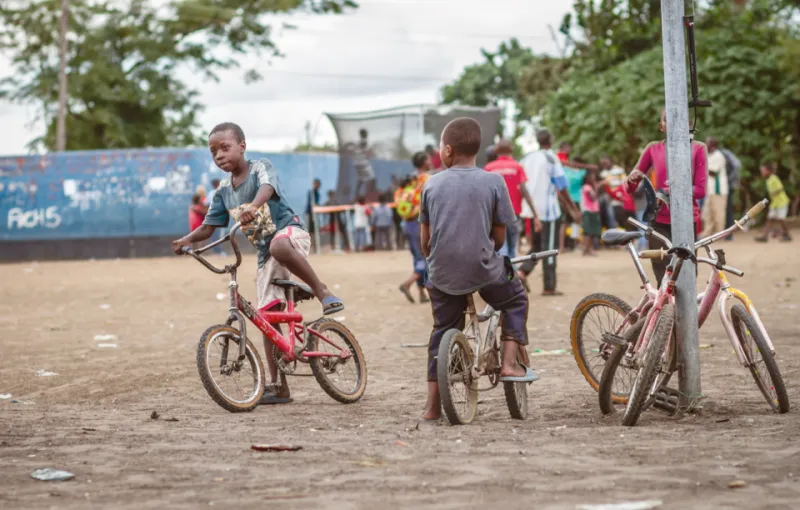
Photo: Chulu sakaz, CC BY-SA 4.0, via Wikimedia Commons
Somewhere around the second week of June, something used to happen in American neighborhoods that's almost impossible to picture today. The school buses stopped running, the front doors swung open, and kids poured out into the streets — and then largely disappeared until dinnertime.
No itinerary. No adult coordination. No check-ins. Just a bicycle, a general sense of the neighborhood's geography, and an entire day with no agenda whatsoever.
For most of the mid-20th century, that was simply what summer was.
The Geography of a Kid's World
The territory a child claimed as their own in 1960s or 1970s America was surprisingly large. Studies of childhood mobility from that era suggest that kids routinely ranged a mile or more from home on their own — crossing major streets, navigating parks and empty lots, moving between backyards with a casual fluency that would make most modern parents uncomfortable just to read about.
You knew every kid on your block by the sound of their bicycle. You knew which yards had dogs, which alleys were good shortcuts, which creek was worth the muddy shoes. That knowledge wasn't given to you by a parent or a GPS app. You built it yourself, one summer afternoon at a time.
Neighborhoods functioned as a kind of distributed supervision system. There were always adults around — people working in their gardens, sitting on porches, watching from kitchen windows — but they weren't coordinating children's activities. They were just present, in the background, in the way that community presence once was. If something went wrong, someone would notice. Everyone understood that without a meeting being called about it.
What Kids Actually Did With All That Time
The honest answer is: not that much, by modern enrichment standards. They rode bikes. They played pickup baseball in empty lots with whatever number of kids showed up. They built forts out of scrap wood and argued about the rules of games they'd invented five minutes earlier. They got bored, then figured out what to do about it.
That last part matters more than it sounds. Boredom, in the developmental psychology literature, turns out to be genuinely important. It's the state that precedes creativity — the uncomfortable gap that forces a child to generate their own solution rather than consume a provided one. A kid who's bored for twenty minutes and then invents a game is exercising a cognitive muscle that a kid who's handed an iPad never gets to use.
Unstructured play also meant navigating real social complexity without a referee. You had to negotiate with kids you didn't particularly like. You had to handle disputes, manage your own frustration, figure out when to push back and when to let something go. Nobody was grading you on it. Nobody stepped in to mediate. You just had to work it out, or go home.
How the Summer Started Shrinking
The transformation happened across several decades and had multiple causes, none of which was entirely wrong on its own terms.
Traffic got worse. As car ownership expanded and suburban streets grew busier through the 1970s and 1980s, the outdoor world became genuinely more dangerous for children on bikes. That concern was real, not manufactured.
The "stranger danger" wave of the 1980s — amplified by high-profile missing children cases and intense media coverage — reshaped American parental anxiety in lasting ways. The statistical reality was that child abduction by strangers was extraordinarily rare, but the cultural perception became that unsupervised children were perpetually at risk. Parents who let their kids roam freely began to feel, and sometimes be treated, as negligent.
At the same time, the enrichment economy took off. Summer camps, sports leagues, academic programs, music lessons, language classes — the industry of structured childhood activity expanded dramatically from the 1980s onward. These programs weren't inherently bad. Many of them were genuinely excellent. But they gradually colonized the calendar in a way that left less and less room for the unscheduled hours that had once defined summer.
By the 2000s, the shift was essentially complete in many middle-class communities. Summer had become a season to be managed rather than one to be lived.
The Liability Problem Nobody Talks About
There's another factor that rarely gets mentioned in nostalgic conversations about childhood freedom: liability.
Schools, parks departments, and community organizations that once provided informal, loosely supervised spaces for kids — the unlocked schoolyard, the neighborhood rec center with an open gym, the public pool with a single lifeguard — gradually pulled back as legal liability concerns grew. The cost of an injury lawsuit changed the calculus of what it was reasonable to offer without close supervision.
The result was a physical environment that became less hospitable to unsupervised children, not because anyone decided kids shouldn't be free, but because the institutions that had once provided the backdrop for that freedom quietly closed their doors to it.
What the Research Actually Shows
Developmental researchers have been tracking the decline of unstructured play for decades, and the findings are consistent enough to be concerning. Children today show higher rates of anxiety and depression than previous generations. They demonstrate lower scores on measures of creative thinking. They report less confidence in their ability to handle unfamiliar situations independently.
None of that can be attributed to a single cause. But the disappearance of unstructured time — of long summer days with no agenda and no adult management — shows up repeatedly as a variable worth taking seriously.
Peter Gray, a developmental psychologist at Boston College, has argued for years that the decline of free play represents a genuine public health issue, not just a cultural shift. When children lose the space to direct their own experience, they lose something important about their sense of agency — their belief that they can handle what the world throws at them.
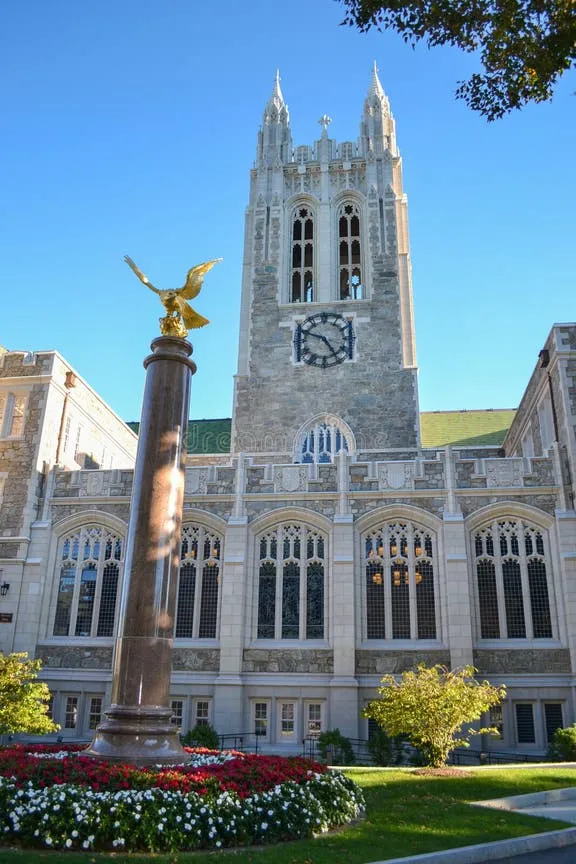 Photo: Boston College, via thumbs.dreamstime.com
The Summer We Keep Trying to Recreate
There's a reason phrases like "free-range parenting" and "unstructured play" have become talking points in parenting culture over the past decade. It's because enough parents sensed, even without the research, that something had been lost.
The challenge is that you can't simply decide to restore the old summer in isolation. The neighborhood infrastructure that made it work — the community presence, the shared understanding that kids were allowed to roam, the physical spaces that welcomed them — has largely been dismantled. One family opting out of scheduled activities doesn't recreate the world where every kid on the block was doing the same thing.
But it's worth remembering what that world produced. A generation of Americans who could read a map, navigate a conflict, tolerate boredom, and find their own way home. Who knew every kid on their block by the sound of their bicycle.
That's not a small thing to have lost.