Your Street Was Your Playground and Everyone's Parents Were Watching: When American Kids Roamed Free
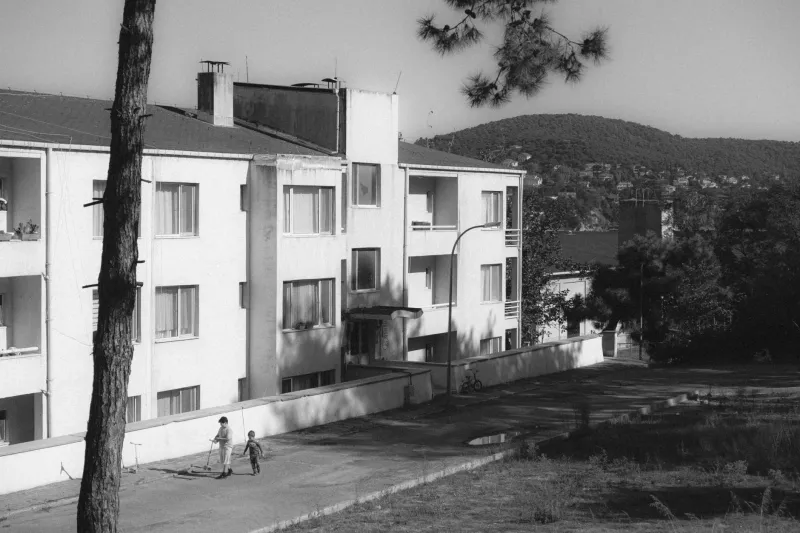
Summer morning, 1982: The screen door slams as eight-year-old Sarah bolts outside after breakfast. "Be back for dinner!" her mom calls, not expecting to see her again until the streetlights come on. Sarah will spend the next ten hours exploring construction sites, building forts in vacant lots, and organizing elaborate neighborhood-wide games of kick-the-can with kids whose parents she's never met but who somehow all keep an eye on everyone's children.
Today's eight-year-olds wake up to color-coded calendars: soccer practice at 9, swimming lessons at 11, supervised playdate at 2. Their summer adventures happen on screens, their friendships form through carefully orchestrated activities, and their independence develops in controlled environments designed by adults who remember their own childhoods but can't imagine allowing their children to experience anything similar.
The Geography of Freedom
Children of the 1970s and 80s operated within what researchers now call a "home range"—the area they could explore independently. For suburban kids, this typically extended six to eight blocks in any direction. They knew every shortcut, every friendly dog, every house where they could get a drink of water, and every yard where they weren't welcome.
Urban children had smaller ranges but deeper knowledge—every corner store owner, every apartment building superintendent, every teenager who might cause trouble or offer help. Rural kids had the largest ranges of all, disappearing into woods and fields for entire days with nothing more than a packed lunch and instructions to "stay out of trouble."
Today's children have home ranges that have shrunk by 90% compared to just one generation ago. Most kids today can't walk alone to places their parents visited freely at the same age. The average American child spends less time outdoors each week than the average maximum-security prisoner.
The Invisible Network of Adult Supervision
What looked like complete freedom was actually supported by an invisible network of community supervision. Mrs. Henderson watched from her kitchen window. Mr. Garcia kept an eye out while watering his lawn. The crossing guard knew which kids belonged in which neighborhoods. Store clerks recognized local children and weren't shy about calling parents if kids got out of line.
This wasn't formal or organized—it was simply how communities functioned. Adults felt responsible for all children, not just their own. A kid acting up would find themselves answering to whatever adult happened to be nearby, who would inevitably know their parents or at least their address.
Parents could let their children roam because they trusted this network. Everyone understood that watching out for kids was part of being a neighbor. The phrase "it takes a village" wasn't a bumper sticker slogan—it was simply how child-rearing worked.
When Boredom Was a Feature, Not a Bug
The children of previous generations experienced something almost extinct today: extended periods of unstructured time with absolutely nothing to do. This wasn't considered a problem to be solved—it was understood as essential for development.
Bored kids created elaborate games with complex rules. They built go-carts from scrap wood and shopping cart wheels. They organized trading systems for baseball cards, comic books, and candy. They formed clubs with secret passwords and elaborate initiation rituals. Most importantly, they learned to entertain themselves without adult intervention.
Today's children rarely experience true boredom. Their schedules are packed with activities, and any downtime is quickly filled with screens. When they do have unstructured time, many literally don't know what to do with it. The skills of self-entertainment and creative problem-solving—developed through hours of having nothing to do—have atrophied through disuse.
The Rise of Stranger Danger Culture
The transformation of American childhood didn't happen overnight. It began with well-intentioned safety campaigns in the 1980s that dramatically overestimated the danger strangers posed to children. High-profile kidnapping cases, though statistically rare, created a culture of fear that made unsupervised outdoor play seem irresponsible.
Parents who had roamed freely as children began driving their own kids everywhere. Walking to school became unusual, then suspicious. Children playing outside without adult supervision prompted concerned calls to authorities. What had been normal childhood behavior was reframed as neglect.
The irony is that children today are statistically safer than they've ever been, but they're treated as if they're in constant danger. Crime rates have dropped significantly since the 1980s, yet parental anxiety has skyrocketed.
The Scheduled Childhood
Modern American children live more structured lives than most adults. Their calendars include music lessons, sports teams, academic tutoring, art classes, and social activities—all carefully scheduled and adult-supervised. This over-scheduling is often well-intentioned, designed to provide opportunities and experiences that will help children succeed.
But something crucial gets lost in translation. When every activity is organized by adults, children don't learn to organize themselves. When every conflict is mediated by grown-ups, kids don't develop conflict resolution skills. When every moment is structured, there's no space for the kind of creativity that emerges from having to figure out what to do next.
The children who once spent summer days creating elaborate neighborhood Olympics with events like "longest wheelie" and "most creative use of a garden hose" are now adults watching their own children move between air-conditioned activities in climate-controlled cars.
Digital Natives, Physical Strangers
Today's children are growing up as digital natives, more comfortable navigating online spaces than physical neighborhoods. They can build elaborate structures in Minecraft but have never built a real fort. They maintain friendships with kids across the country through gaming platforms but don't know the children who live next door.
This isn't inherently bad—digital literacy is essential in the modern world. But it represents a fundamental shift in how children experience space, friendship, and independence. Virtual exploration has replaced physical exploration, and online communities have substituted for neighborhood relationships.
The skills that previous generations developed through free-range childhood—spatial awareness, risk assessment, social negotiation, creative problem-solving—now have to be deliberately taught rather than naturally acquired.
What We've Gained and Lost
Today's children are safer, more supervised, and have access to opportunities their grandparents couldn't have imagined. They're exposed to diverse perspectives through technology, receive professional instruction in activities that were once self-taught, and are protected from many of the risks that previous generations simply accepted.
But they're also more anxious, less independent, and more reliant on adult direction. They have fewer opportunities to develop resilience through minor failures, less experience with unsupervised social interaction, and minimal practice with the kind of creative problem-solving that emerges from having to entertain yourself with whatever's available.
The Neighborhood That Disappeared
Perhaps most significantly, we've lost the neighborhood as a space for children. The kids who once knew every family within six blocks now grow up in communities where neighbors are strangers and children are hidden behind scheduled activities and privacy fences.
The summer evening chorus of children playing outside—the sound that once defined American neighborhoods—has been replaced by the quiet hum of air conditioners and the distant sounds of organized activities happening elsewhere. We've gained safety and structure, but we've lost something harder to quantify: the experience of childhood as a time of genuine freedom and discovery.
The children who once ruled the streets until the streetlights came on are now adults wondering if their own kids will ever know what it feels like to be truly, wonderfully, temporarily lost in their own neighborhood.