When Every Block Had Its Own Everything: America's Lost World of Neighborhood Commerce
When Every Block Had Its Own Everything: America's Lost World of Neighborhood Commerce
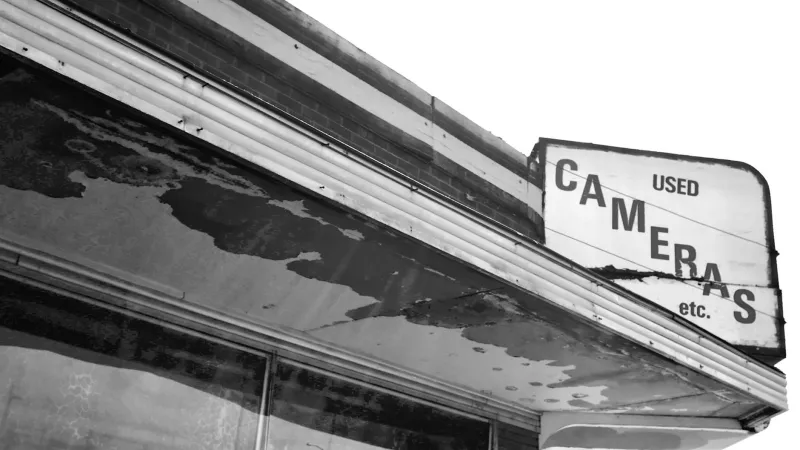
Walk through any American suburb built before 1960, and you'll notice something odd about the architecture. Scattered among the houses are small commercial buildings—former corner groceries, old pharmacies, tiny hardware stores—now converted into law offices, hair salons, or simply boarded up. These remnants tell the story of a dramatically different America, one where commerce happened on every block and shopping meant knowing the person behind the counter.
The America of a Thousand Small Shops
In 1950, the typical American neighborhood looked nothing like today's retail landscape. Instead of driving to a strip mall or ordering online, families walked to Charlie's Market for groceries, stopped by Murphy's Hardware for a wrench, and picked up prescriptions from the local druggist who had been serving the neighborhood for decades.
These weren't just businesses—they were community institutions. The corner grocer extended credit during tough times, keeping handwritten tabs in a worn ledger. The hardware store owner could fix your toaster and order specialized parts for your 1940s washing machine. The local pharmacist knew your medical history better than most doctors do today.
Consider the numbers: In 1958, America had over 58,000 independent grocery stores. Today, that number has plummeted to fewer than 21,000, even as the population has nearly doubled. The corner pharmacy? There were 45,000 independent drugstores in 1960. By 2020, that number had collapsed to just 19,400, with most prescriptions now filled at CVS, Walgreens, or Walmart.
How Shopping Actually Worked
The daily routine of commerce was entirely different. Housewives (and it was mostly housewives) made multiple stops throughout the week. Monday might mean a trip to the butcher for the week's meat, Tuesday to the baker for fresh bread, Wednesday to the corner market for canned goods and produce.
This wasn't inefficient—it was social infrastructure. These brief daily interactions created networks of mutual support. Store owners knew when families were struggling financially, when someone was sick, or when a teenager was getting into trouble. They served as informal community watchdogs, credit counselors, and neighborhood historians.
The credit system was particularly remarkable. Before credit cards existed, local merchants maintained personal relationships that allowed families to buy necessities when money was tight. "Put it on my tab" wasn't just a phrase—it was how millions of Americans managed cash flow, with payments settled weekly or monthly based on payday schedules.
The Great Transformation
The shift began in the 1960s and accelerated through the following decades. Suburban shopping centers offered the convenience of one-stop shopping and ample parking. Chain stores leveraged economies of scale to offer lower prices. Refrigeration and freezer technology allowed families to shop less frequently, buying in bulk.
Walmart, which opened its first store in 1962, epitomized this transformation. By 2020, the company operated over 4,700 stores in the United States, with each Supercenter serving a radius that once supported dozens of independent businesses. The average American now travels 5.2 miles to reach their primary grocery store, compared to the few blocks their grandparents walked.
The convenience was undeniable, but something fundamental was lost. A 2019 study found that Americans now have fewer than two close friends, compared to three in 1990. The daily social interactions that once happened naturally during routine shopping have largely disappeared, replaced by self-checkout kiosks and Amazon deliveries.
What We Gained and Lost
Today's retail landscape offers unprecedented convenience and choice. You can order virtually anything online and have it delivered within hours. Supermarkets stock 40,000 different products, compared to the few hundred items in a 1950s corner store. Prices, adjusted for inflation, are generally lower for most goods.
But we've also lost something harder to quantify. The social capital that came from daily interactions with familiar faces. The economic resilience that came from locally owned businesses that kept profits in the community. The personal service that came from dealing with someone who had a stake in your satisfaction beyond this single transaction.
Local business ownership was also a pathway to middle-class prosperity. In 1950, running a corner store or small pharmacy could support a family and build generational wealth. Today, that same entrepreneurial energy is more likely channeled into franchise operations or gig economy work that offers less security and community connection.
The Remnants That Remain
Some neighborhoods have fought to maintain their commercial character. Cities like Portland, Seattle, and Brooklyn have seen a resurgence of independent businesses, though these often cater to affluent consumers seeking authenticity rather than serving as essential community infrastructure.
Farmers markets, local co-ops, and independent coffee shops attempt to recreate some of the social functions of the old corner store, but they're typically weekend destinations rather than daily touchstones.
Reflecting on What We've Built
The transformation of American commerce reflects broader changes in how we live, work, and relate to our communities. We've optimized for efficiency and convenience, sometimes at the expense of connection and local resilience.
The next time you're in a big box store or clicking "add to cart" online, consider what your grandparents' shopping day looked like. They may have paid slightly more and had fewer choices, but they were embedded in a web of relationships that made neighborhoods feel like genuine communities. Whether we can—or should—find ways to rebuild those connections in our current retail landscape remains one of the most interesting questions about America's future.