The Three-Week Wait for 'I Love You': How America's Romance Survived on Paper and Patience
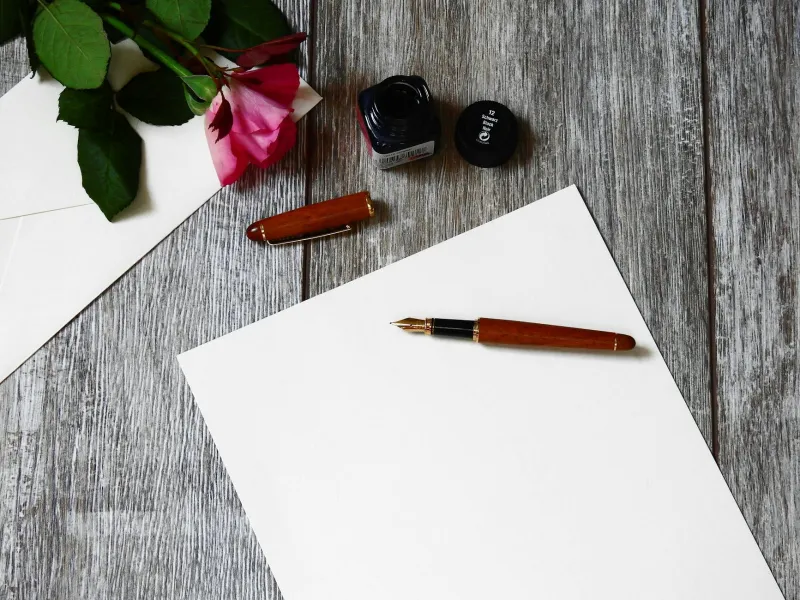
The Mailbox That Held Your Future
Picture this: you're head-over-heels for someone living two states away, and your only connection is a piece of paper, an envelope, and a three-cent stamp. No texting "good morning" every day, no instant photo sharing, no knowing if they're online or ignoring you. Just you, your thoughts, and the agonizing wait for the postal service to carry your heart across America.
This wasn't some romantic fantasy—this was how millions of Americans built their most important relationships well into the 20th century. From the 1800s through the 1960s, the handwritten letter wasn't just communication; it was the foundation of American romance, friendship, and even business.
When Words Actually Mattered
In 1900, the average American household sent and received about 200 letters per year. That's nearly four letters every single week—incoming and outgoing combined. Compare that to today, when the typical American receives maybe a dozen personal letters in an entire year, and most of those are thank-you notes from weddings.
Back then, writing a letter was an event. You'd sit down with your best paper, choose your words carefully, and pour your thoughts onto the page knowing this single piece of communication might be your only contact with someone for weeks. A poorly written letter could end a courtship. A beautiful one could start a marriage.
Take Civil War soldiers, who wrote an estimated 180 million letters home during the conflict. These weren't quick "I'm fine" updates. Soldiers would write 10-page letters describing everything from battlefield conditions to their dreams for the future, knowing their families would read and reread every word until the paper wore thin.
The Ritual of Romance
Courtship by letter created a completely different kind of intimacy. Young people would exchange dozens of letters before ever spending significant time alone together. They'd fall in love with each other's minds first, building relationships through carefully crafted thoughts rather than physical attraction or shared Netflix passwords.
Letter-writing had its own elaborate etiquette. The quality of your stationery mattered. Your handwriting was judged. Even the way you folded the paper sent messages—a specific fold might indicate urgency, while elaborate folds showed you had time to spend on the recipient.
Women collected special letter paper and kept multiple pen nibs for different occasions. Men practiced their penmanship like we practice our social media posts today. The anticipation of receiving a letter from someone special could make your entire week.
The Economics of Emotion
A first-class stamp in 1900 cost two cents—roughly equivalent to 65 cents today. But even that small cost made communication more deliberate. You didn't dash off random thoughts or send a dozen messages throughout the day. Every letter had to be worth the postage.
The postal service was remarkably efficient for its time. A letter mailed from New York could reach San Francisco in six days by 1900, and most letters within the same state arrived within 2-3 days. Americans planned their correspondence around these delivery times, timing important letters to arrive for birthdays, holidays, or special occasions.
What We Lost When We Gained Speed
Today's instant communication has obvious advantages—no one's arguing that three-week delivery times were better than three-second text messages. But we've lost something profound in the translation.
Modern relationships often lack the depth that came from having to express everything in writing. When you only had one chance per week to communicate with someone important, you made those words count. You shared your deepest thoughts, your fears, your dreams, because you might not get another chance for days.
The permanence of letters also created a different kind of intimacy. People kept bundles of letters tied with ribbons, rereading them during lonely moments. These physical objects became treasures, passed down through families. Today's text threads disappear into digital archives, rarely revisited.
The Art of Anticipation
Perhaps most importantly, letter-writing taught Americans the value of anticipation. Waiting for a letter from someone you cared about created a unique kind of excitement that our instant-gratification culture has forgotten. The sound of the mailman's approach could make your heart race. An empty mailbox was genuinely disappointing.
This anticipation made the eventual letter more precious. You'd savor every sentence, read between the lines, and often read the letter multiple times. Compare that to today, when we skim through hundreds of messages, barely absorbing most of them.
The Vanishing Craft
By the 1970s, long-distance phone calls became affordable enough for regular use. By the 1990s, email began replacing personal letters. Today, handwritten letters are so rare that receiving one feels almost magical—which says everything about how dramatically we've changed our relationship with written communication.
We've gained speed, convenience, and constant connection. But we've lost the art of patience, the beauty of anticipation, and the deep satisfaction of crafting words that truly mattered. In our rush to communicate instantly, we may have forgotten how to communicate meaningfully.
The next time you're frustrated by someone taking an hour to respond to your text, remember when Americans built lifelong relationships waiting three weeks for a single letter—and somehow, it worked.