Main Street Went Dark Every Sunday: When America Actually Stopped for a Day
The Day America Stood Still
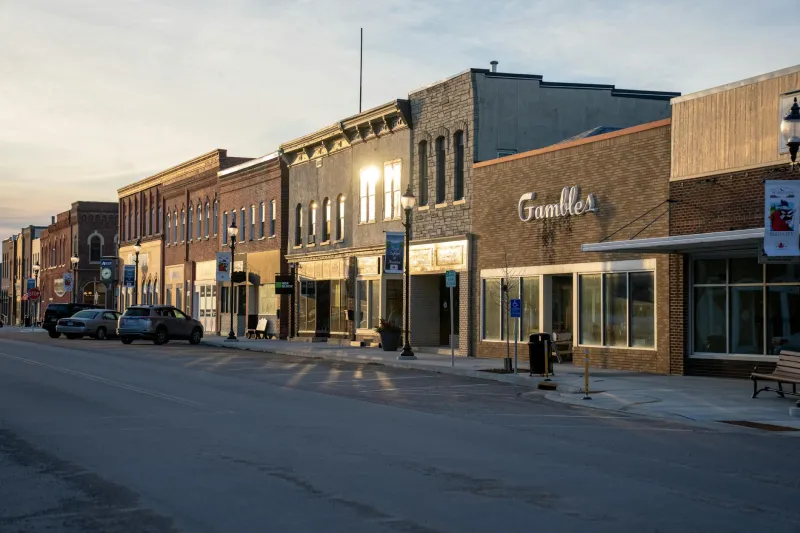
Every Sunday morning in 1955, Main Street America looked like a movie set after the cameras stopped rolling. Storefronts stood dark behind locked doors. Gas stations hung "Closed" signs. Even the local diner—open every other day from dawn to midnight—pulled its shades and went quiet.
This wasn't economic hardship or natural disaster. This was intentional. This was Sunday, and Sunday meant everything stopped.
For most of American history, the seventh day carried legal weight. Blue laws—named after the blue paper on which colonial regulations were originally printed—mandated business closures across the country. But the laws only formalized what most communities already practiced: Sunday as a day set apart from commerce, work, and the relentless machinery of daily life.
When Laws Enforced Rest
Blue laws weren't suggestions. In many states, selling non-essential items on Sunday could result in fines or even jail time. You couldn't buy a car, furniture, or clothing. Liquor stores stayed shuttered. Many gas stations closed entirely, leaving travelers to plan their routes around fuel availability.
The restrictions seem almost medieval now, but they reflected a different understanding of time and community. Sunday wasn't just about religious observance—though that was certainly part of it. It was about creating space for activities that commerce couldn't monetize: family dinners that lasted hours, neighborhood visits, long walks, reading, rest.
Even in major cities, the effect was dramatic. Manhattan's bustling streets fell quiet. Chicago's industrial districts went silent. Los Angeles—already sprawling by the 1950s—felt almost pastoral on Sunday mornings.
The Rhythm of Forced Stillness
Families developed entire traditions around Sunday's enforced leisure. Saturday became preparation day—grocery shopping, errands, cleaning. Sunday was for different activities entirely.
Children played elaborate neighborhood games that lasted all day. Adults visited relatives they barely saw during the work week. Communities organized picnics, softball games, and church socials. Without stores competing for attention, people found other ways to spend their time and money.
The economic impact was real but accepted. Businesses lost potential revenue, but everyone lost it together. No competitive advantage existed for staying open because staying open wasn't legal. The playing field was level, even if it was closed.
The Cracks Begin to Show
The first challenges came from necessity. Gas stations near highways won essential-service exemptions. Restaurants in tourist areas argued they provided crucial services to travelers. Pharmacies claimed medical emergencies required Sunday hours.
Each exception created pressure for more. If gas stations could open, why not convenience stores? If restaurants served tourists, why not grocery stores serving local families who needed milk for Monday morning?
The 1960s brought broader cultural shifts that made Sunday closures feel increasingly outdated. More women entered the workforce, creating demand for weekend shopping. Suburban families with two working parents needed flexible schedules for errands. The civil rights movement challenged laws that seemed arbitrary and restrictive.
The Great Unraveling
By the 1970s, blue laws were falling like dominoes. Courts ruled many restrictions unconstitutional. States repealed legislation that had stood for decades. Retail chains discovered that Sunday could be their most profitable day—families had time to shop, and competition was initially limited.
The transformation happened remarkably quickly. Within a decade, Sunday shopping went from illegal to normal to expected. Malls that once sat empty on the seventh day began advertising Sunday sales. Grocery stores extended their hours. Even small-town Main Streets gradually flickered back to life.
Today's Never-Ending Commerce
Now Sunday looks identical to every other day in commercial America. Amazon delivers packages. Walmart never closes. Online shopping operates around the clock. The idea that an entire society would voluntarily—or legally—stop buying and selling for 24 hours seems almost quaint.
Modern Americans have gained convenience but lost something harder to define. Sunday has become another Saturday, which has become another Friday. The rhythm of work and rest has been replaced by the steady hum of continuous availability.
Families struggle to find shared downtime when stores, activities, and obligations never pause. Children grow up without experiencing collective stillness—the strange peace that comes when an entire community agrees to stop striving for a day.
The Hidden Costs of Convenience
What seemed like liberation—the freedom to shop, work, and consume seven days a week—has created new forms of pressure. Retail workers can't count on Sundays off. Small business owners feel compelled to stay competitive with always-open chains. Families find it harder to synchronize their schedules when every day offers the same options.
The 24/7 economy promises efficiency and choice, but it delivers something else entirely: the elimination of shared time. When everything is always available, nothing feels special. When every day is the same, no day feels sacred.
What We Gave Up
Older Americans remember Sunday's different quality—not just the closed stores, but the slower pace, the fuller conversations, the sense that time belonged to people rather than productivity. It wasn't perfect. Blue laws could be arbitrary and exclusionary. But they created something that market forces alone cannot: collective pause.
In gaining the right to shop every day, America lost the practice of stopping together. And in a culture increasingly defined by individual choice and continuous consumption, that loss feels more significant with each passing Sunday that looks exactly like every other day of the week.