Before Your Phone Knew Everything, Your Brain Had To: The Lost Art of Human Memory
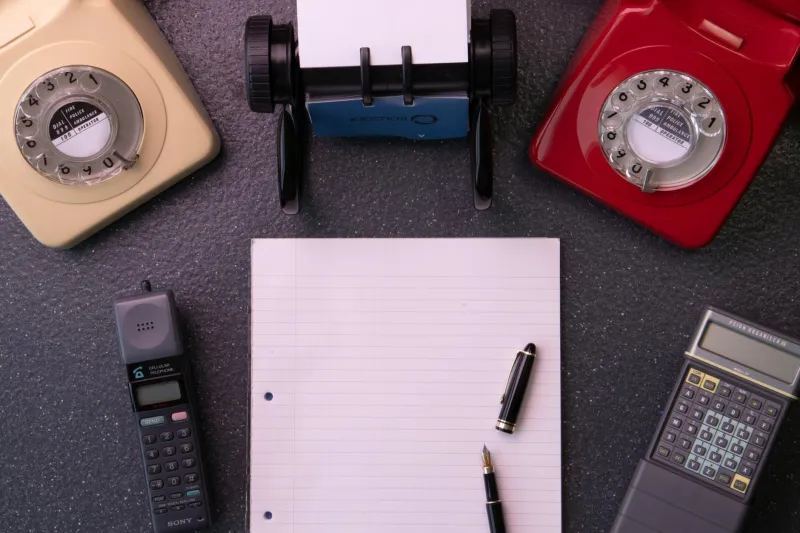
The Mental Rolodex Generation
In 1995, the average American adult could recite at least fifteen phone numbers from memory. Their own, their parents', their siblings', their best friends', their doctor, their dentist, their workplace, their favorite restaurant, and several others that mattered in daily life. This wasn't considered impressive—it was simply how brains worked.
Today, most people struggle to remember their own cell phone number, let alone anyone else's. We've outsourced that mental capacity to devices that store thousands of contacts, leaving our biological memory banks to atrophy like unused muscles.
The shift represents more than technological convenience. It's a fundamental change in how human minds engage with information, relationships, and the world around us.
When Directions Lived in Your Head
Pre-GPS Americans developed sophisticated mental mapping abilities that would seem almost supernatural today. They knew which streets ran north-south in their city, where the major highways intersected, and how to navigate by landmarks rather than turn-by-turn instructions.
Road trips required actual planning. Families studied atlases, traced routes with their fingers, and memorized key waypoints. Getting lost was common and accepted—part of the adventure rather than a technological failure.
Drivers developed intuitive senses of direction and distance. They could estimate travel times based on experience rather than algorithms. They knew alternate routes when traffic snarled the main roads. Navigation was a skill, not an app.
The Appointment Calendar in Your Mind
Before smartphones sent push notifications, people maintained elaborate mental scheduling systems. They remembered doctor appointments, social commitments, work deadlines, and family events without digital assistance.
This required active cognitive engagement. People reviewed their mental calendars regularly, cross-referenced obligations, and developed personal systems for remembering important dates. Forgetting an appointment carried real social consequences—no "sorry, my phone died" excuse existed.
The mental effort created stronger memory formation. When you had to actively recall information rather than passively receive reminders, the information embedded more deeply in long-term memory.
Facts at Your Fingertips—Inside Your Head
Conversations once required drawing from personal knowledge stores. If someone mentioned a historical event, movie actor, or scientific fact, you either knew it or you didn't. No quick Google search could settle disputes or fill knowledge gaps.
This limitation forced different kinds of thinking. People developed broader general knowledge because they couldn't rely on instant access to specific information. They remembered stories, quotes, jokes, and trivia because retelling them required carrying them in memory.
Libraries and encyclopedias served as external memory storage, but accessing them required effort. This friction meant people were more selective about what they chose to look up and more likely to remember what they found.
The Social Memory Network
Pre-smartphone communities functioned as distributed memory systems. Your neighbor remembered which mechanic was trustworthy. Your coworker knew the best route to the airport. Your aunt recalled family birthdays and anniversaries for everyone.
Social interactions often involved sharing and comparing information stored in human memory. People asked each other for directions, recommendations, and reminders. These exchanges strengthened both relationships and collective knowledge.
When someone moved or died, their personal knowledge database went with them. Communities could lose decades of accumulated wisdom about local history, family connections, or practical know-how.
The Smartphone Revolution's Hidden Cost
The iPhone's 2007 launch didn't just introduce a new device—it fundamentally altered human cognition. Within a decade, external digital memory became so reliable and accessible that biological memory began to seem unnecessary.
Why remember phone numbers when your contacts list never forgets? Why memorize directions when GPS provides real-time guidance? Why maintain mental calendars when apps can remind you of everything?
The logic was compelling, but the neurological consequences were profound. Research shows that when people expect information to be available externally, they remember less of the information itself and more about where to find it—a phenomenon called the "Google effect."
What We've Lost in Translation
Memory isn't just storage—it's the foundation of thinking, creativity, and wisdom. When information lives in your head rather than your device, it becomes available for unexpected connections, creative combinations, and intuitive insights.
The person who memorized poetry could draw on those rhythms and images in conversation. The navigator who knew the city by heart could spot shortcuts and patterns invisible to GPS users. The friend who remembered your preferences and stories could offer more thoughtful support and companionship.
External memory is perfect but passive. Human memory is flawed but active, constantly reorganizing, connecting, and creating meaning from stored information.
The Cognitive Trade-Off
Smartphones have undeniably expanded human capability. We can access more information, navigate more accurately, and coordinate more efficiently than any previous generation. The benefits are real and transformative.
But the trade-offs are equally real, if less visible. We've gained access to infinite information while losing the ability to carry meaningful amounts of it in our heads. We've perfected external navigation while weakening internal spatial reasoning. We've automated memory while diminishing the cognitive muscles that memory exercise provides.
Reclaiming Mental Muscle
Some people are deliberately exercising their biological memory—memorizing poetry, learning languages, practicing mental math, or navigating without GPS. They're rediscovering what their grandparents took for granted: the satisfaction and capability that comes from carrying knowledge in your head rather than your pocket.
The goal isn't to abandon smartphones but to understand what we've traded away. Human memory, with all its limitations, remains the foundation of thinking, creativity, and wisdom. In outsourcing it completely, we risk losing not just information, but the cognitive abilities that make us most human.
Your brain was once your primary computer, and it was remarkably good at the job. Maybe it's worth remembering what that felt like.